How to prune plants and hedges
November 4, 2025 · Iris Journal
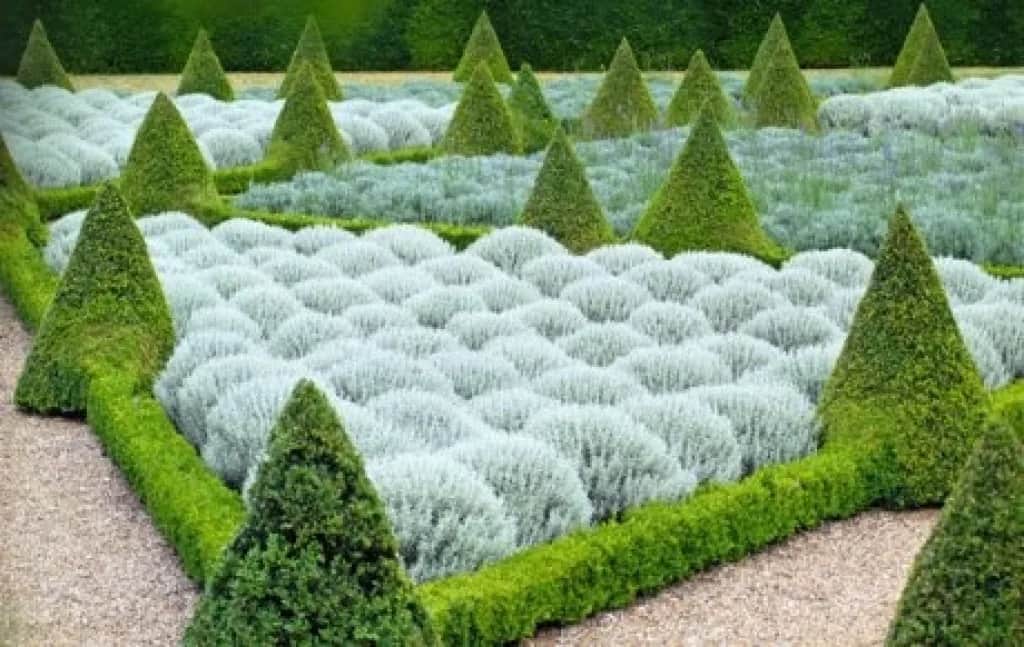
How to trim plants (hedges, deciduous, coniferous, conifers, climbing plants)
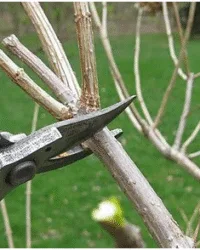
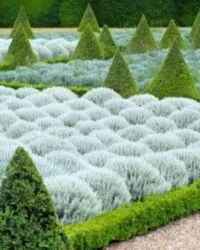
Spring cuts, autumn cuts, how do we proceed?
The technical operations of forming the trunk and the crown are applied to several categories of woody ornamental plants. Training and maintenance cuts are made according to the characteristics of each species and according to the location of the plant within the green space created: solitary, in groups or hedges.
How do we trim the hedge? Cutting/trimming of hedges.
Hedges can be made of deciduous or coniferous shrubs.
Among the deciduous species most common in hedges are: Buxus, Spiraea, Ligustrum Vulgare, Deutzia, Weigela, Forsythia, Berberis, Pyraqcanta, Philadelphus, Physocarpus, Kerria japonica, Potentila, Buddleja, Syringa, Chaenomeles (Japanese quince), Tamarix (tamarisk), Hibiscus, Lavandula (lavender), hornbeam, beech, etc.
Softwood hedges can be made of species such as: Thuja, Chamaecyparis, Taxus, Juniperus Stricta, Juniperus Skyrochet, Spruce, etc.
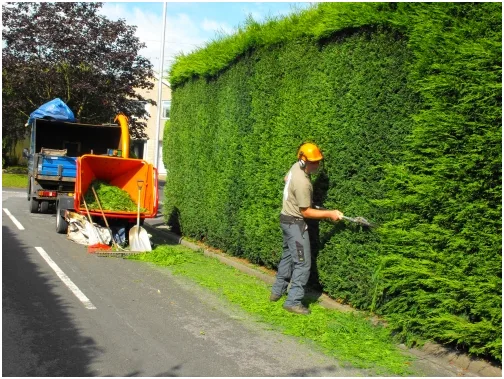
For the formation and maintenance of the hedges, it is necessary to cut them. In the first three, four years after planting, hedges are cut to obtain the desired shapes.
These cuts are usually made on deciduous fences in spring and autumn, in spring after the danger of frost has passed (April, May) and in autumn in September, October (when the summer heat has passed).
In the spring, the branches are shortened to a length of 10-15 cm (3-4 buds), with this cutting, the thickening of the plants that make up the hedge is stimulated, and the plant also strengthens its root. In autumn, only the non-lignified tops of the hedge, which would freeze in winter, are cut. This operation is performed in the first three to four years in the case of hedges, depending on the dimensions the plants had initially, when planted.
When the fence has thickened, the branches of the plants intertwine and it has reached the desired height, only its maintenance works are performed. These works consist in the annual trimming of the hedge, maintaining the desired height or shape. Maintenance pruning includes trimming on its sides, maintaining not only the desired height but also the width.
Attention!
- For the hedges made of plants that bloom in early spring (eg: honeysuckle, forsythia, jasmine) maintenance cuts will be made after flowering (if you want to enjoy a rich flowering of the plants). At the borders of lavender in the months of March-April, one third of the branches are shortened up to the lignified part.
- For fences made of softwoods (including conifers), formation and maintenance cuts are made about once a year, in May, this not being a rule, however, because the growth rate of softwoods is different depending on the species.
- Conifers with a columnar shape (smaragd thuja, columna thuja, strict juniper, skyrochet juniper, columnar yew, etc.) are corrected in the first years only in case of significant irregular growth. As a rule, their growth is normal and no cutting/pruning is done. After formation, the plants are cut with the help of hedge shears (mechanical or electric) to stimulate the thickening of the plants. The annual shortening of the branches will be done if we want to keep the fence at a certain height.
Plants placed alone or in groups
And in the case of plants placed singly or in groups, training and maintenance cuts are necessary, especially for deciduous shrubs.
Deciduous pruning
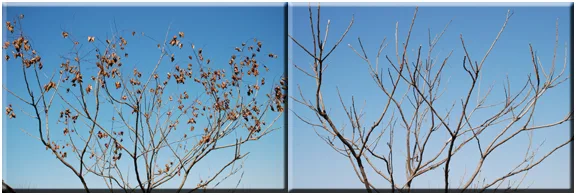
In the image above you have an example of spring pruning applied to a leafy Coleuteria Paniculata tree placed alone.
In the case of deciduous shrubs, in the second year after planting, in order to obtain a healthy plant with many branches (a thick bush), training pruning is applied. All the branches of the plant are shortened from 10-15 cm from the ground, in order to thicken it, repeating the operation in the following years until a healthy bush is obtained, with many vigorous branches.
Example: trimming a Spiraea - Cununita plant in the spring.
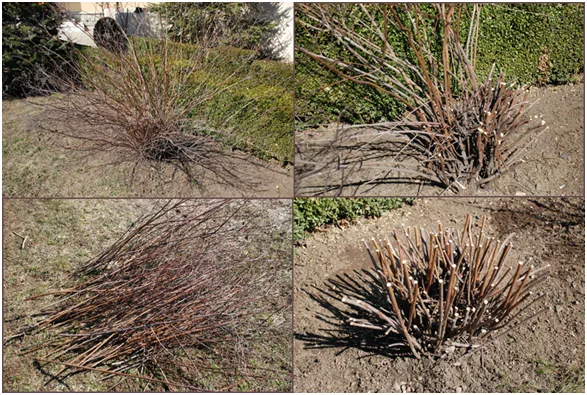
This operation is performed again about once every 5 years to rejuvenate the plant. These cuts are made after the danger of frost has passed, in early spring for species such as:
Buddleja – butterfly bush; Berberis – barberry; Cornus – dogwood; Chaenomeles – Japanese quince; Deutzia; Euonymus – spindle; Kerria – Japanese rose; Pyracantha – firethorn; Physocarpus; Philadelphus – mock orange; Potentilla; Tamarix – tamarisk; Weigela-dervilla etc
Attention!
In the case of species that bloom in early spring, such as Forsythia-forsitia, Philadelphus – mock orange, Spiraea – spirea, Syringa-lilac, Viburnum – snowball bush, the cuttings to form the crown are made after flowering.
No cuts are made to: Hydrangea - hydrangea; Rhododendron; Azalea, unless they have dry branches, frosted tips.
Cuttings/trimming of softwoods/conifers
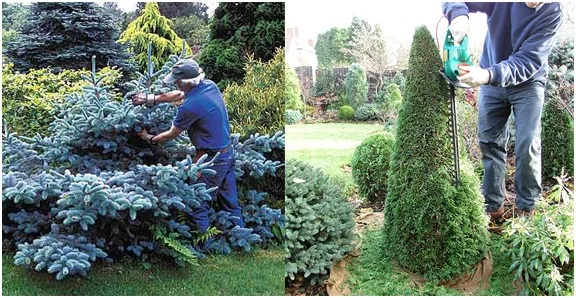
Softwoods generally require less frequent pruning, as they have more regular shapes. But if trimming is desired, this operation does not affect their growth and development in any case.
On the contrary, if there are branches that develop more, they are shortened to the level of the crown without any problem. If we want to keep them at a certain height, the tops of the plant are shortened to the desired height. Large resinous trees that are planted in a smaller space can be trimmed around this, leading to the thickening of the crown and obtaining very beautiful shapes.
This operation can be done after a certain period of time, 2-3 years, in most softwoods it is even indicated because it leads to the thickening of the crown.
The species of Thuja, Juniper, Cypress, Yew, Pine, Larch, Spruce, Douglas fir tolerate pruning very well. Except that, as already said, the operation must be done after the frost period has passed and outside the periods of strong heat (early spring or late autumn).
Cuttings on climbing plants
Another category is represented by climbing plants such as: Lonicera - honeysuckle; Hedera - ivy; Campsis – trumpet vine; Wisteria-wisteria; Parthenocissus – Virginia creeper.
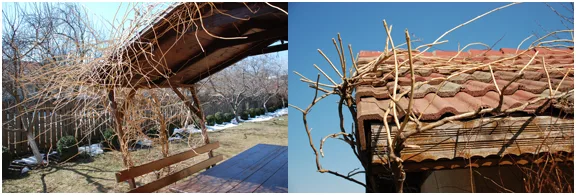
Example: Pruning a climbing plant of Campsis radicans – trumpet vine.
In the first years, they must be cut to form a large number of shoots, being able to cover large areas of pergolas, fences, etc. After they have reached the desired size, they can only be cut if we want to stop their growth.
Tip: Use parts of the cut stems to form cuttings and multiply deciduous plants by the vegetative propagation method.