
Why is your thuja drying out?
November 4, 2025 · Iris Journal
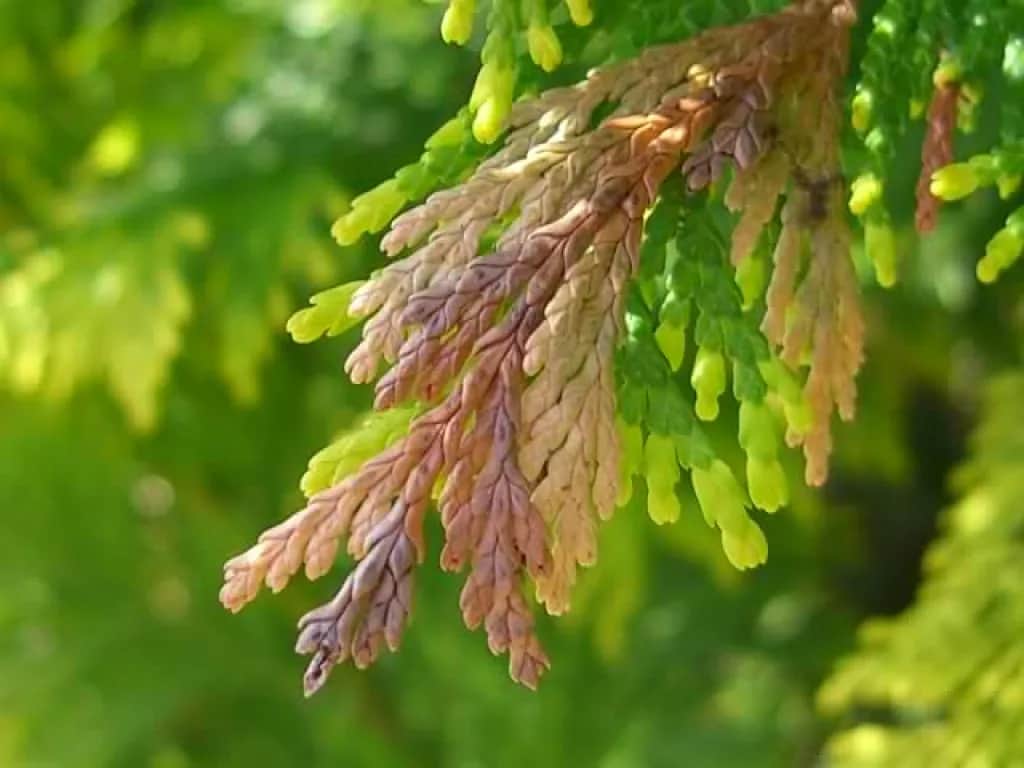
Drought
When we are faced with the problem of the drying of Thuja plants (popular Thuja), we must exclude in the first phase the drying of the branches or the plant due to the lack of water. These plants have a superficial rooting, having high demands on soil and atmospheric humidity, therefore it is good to avoid drought stress. If you didn't water them properly during periods of drought and hot weather, the plants begin to dry gradually, starting with the top of the shoots, from the outside to the inside from the top to the base.
Surplus water
Also check that the plants are not in very wet and heavy soil, because in the case of root asphyxiation and excess water, the symptoms are similar. In this case, try to improve the quality of the soil by adding peat.
Adaptation period after planting
In order to develop harmoniously and grow visibly, the plant needs time to develop a strong root. In the first year after planting, small dry twigs appear from place to place on the crown of the plant. They can dry out, turn yellow, turn brown due to physiological causes, break due to the wind or appear due to large temperature variations from one short period to another. Dry branches must be cleaned or cut regularly to give the plant the opportunity to regenerate.
Otherwise, the disease should not be confused with the natural physiological process of scaly leaves falling and new shoots growing. This process occurs especially in the aged parts of the plant and in the shaded parts inside the crown where the light cannot penetrate. When planted next to concrete walls, thuja plants change their appearance and become intensely green due to the strong heat and sunlight.
Once the causes of lack of water or excess water are ruled out, we can move on to look for a possible disease or pest attack.
Diseases
It is very important to carefully examine the branches to make sure that the plant is not affected. Both Thuja and other conifers with scaly foliage structure, similar to Thuja, such as Chamaecyparis, Juniperus species, can be affected by pathogens that dry the branches and gradually lead to the complete and irreversible drying of the plants.
In general, these species are resistant, but the installation of diseases can be favored by: improper planting (improper planting period, small distance between plants, improper soil conditions), large variations in soil moisture, large variations in temperature or improper administration of chemical fertilizers.
The most damaging and frequent diseases encountered in Thuja are:
- Berckmann's Blight – Necrosis of the branches from the outside to the inside of the crown.
- Cercospora Needle Blight – Drying of the branches from the inside to the outside of the crown.
- Kabatina blight ¬- Drying caused by the fungus Kabatina Thujae
- Keithia blight – Drying caused by the fungus Didymascella Thujina.
i. Berckmann's Blight – Necrosis or drying of the branches from the outside to the inside of the crown.
The disease is caused by the phytopathogenic fungus (Seimatosporium berkmansii) which destroys the branches of Thuja plants and also affects Juniperus and Chamaecyparis species.
Symptoms
The infection settles on the young branches and then spreads to the older branches (from the tips to the inside of the branch). It can be seen by changing the color of the scaly tips of the branches from green to reddish brown. In September, when the pathogen fruits, the spores are dispersed by rain, insects, wind and enter the cracks of the bark where they overwinter. In the spring, the formed spores are dispersed and produce new infections. They attack the branches causing their severe drying, which finally leads to the drying of the plant.
Fighting and treatments
To prevent the occurrence of the disease, the following can be considered:
- Large variations in soil moisture are avoided by watering regularly in the morning or evening, while avoiding excess water. The specimens planted in the current year are watered constantly (every 2 days) but not excessively, to encourage the development of the root system in depth. The application of specific chemical fertilizers is done during the growth periods.
- Treatments and sanitation works will be carried out from the first signs of illness. A treatment is carried out to destroy the fruiting bodies of the pathogen to avoid dispersal, then cut the dry branches and shake the plant well. The browned branches fallen on the ground are collected and burned at the latest until the end of June, before they become the source of infection of the tree.
Treatments
The treatments are applied when the symptoms of the disease are detected, regardless of the period or preventively, following the following treatment scheme:
II. Cercospora Needle Blight – Drying of the branches from the inside to the outside of the crown.
The disease is caused by the pathogen Cercospora sequoiae, which causes drying of branches in Thuja species but also in Juniperus spp. and Chamaecyparis spp. plants.
Symptoms
The drying of the plant starts from the base of the trunk inside the crown towards the top of the branches. The disease settles on old, mature branches and then spreads to younger branches and new shoots. The affected leaves turn yellow then brown, crumble and fall to the ground leading to the destruction of the plant by the complete drying of the branches.
Fighting and treatments
It is necessary to periodically control the plants inside the crown towards the stem, in order to detect possible infections in time and apply the necessary treatments urgently.
Because the infections initially appear at the base of the stem, inside the crown of the plants, the disease is detected most of the time late and thus secondary infections occur that weaken and debilitate the plant even more. To prevent the occurrence of the disease, avoid planting during vegetation periods, during periods of drought and hot weather, keep the appropriate distance between plants.
Treatments
The treatments are applied immediately upon finding the symptoms of the disease, regardless of the period.
In general, the treatments are applied as follows: spring-sf. April, Inc. may (1-3 treatments), with products based on: copper, mancozeb, azoxystrobin.
The interval between one treatment and the next is generally 5-7 days. The specific instructions for use are presented on the leaflet of the fungicidal substances and must be followed.
Before performing the treatment, shake the plants well and wash the inside of the crown with a jet of water. Branches that have fallen to the ground (we suggest shaking the plant directly on a foil) are collected and burned to avoid the spread and re-infection from the fruiting of the pathogen.
In order for the treatment solution to reach the stem and the branches inside the crown, it is recommended to generously bathe the plant with the treatment solution.
III. Kabatina thujae – Kabatina type drying
Symptoms
The disease is caused by the pathogen Kabatina thujae. . The disease causes the destruction of Thuja plants and affects much more seriously the species of Juniperus and Chamaecyparis (Kabatina juniperis).
In the months of April and May when the pathogen fruits, the spores are spread by insects, wind and rain and they can penetrate the lesions of the branches, in the cracks of the bark, then spreading in the structure of the whole plant. The pathogen overwinters in the tissue of infected plants.
The symptoms of the disease appear only in the spring following the infestation and can be observed even before the plants start growing. Fungi are produced under the epidermis at the end of winter and erupt on the epidermis of the plant in the months of February-March when the first symptoms of the disease can be observed.
The pathogen frequently attacks last year's tissues and growths, the fungus being less able to attack new shoots with healthy tissue. The attacked tissue turns yellow or red and then turns brown, turns brown, dries and falls from the plant at the end of May, beginning of June. The discoloration starts from the tip towards the base of the branch and extends over a length of approximately 5 centimeters. Analyzing the yellow branches in detail, at the base of the discolored area, you can see black-gray cushions or dots where the pathogen's fruiting bodies are installed.
Fighting and treatments
To prevent the occurrence of the disease, the following can be considered:
- Planting at appropriate distances (from other plants, walls or curbs) and preferably outside of hot periods.
- • Appropriate fertilization and soil enrichment.
- Avoid cutting plants in wet weather and thus creating areas, wounds where pathogens can enter.
- Avoid sprinkler irrigation, excessive and irregular watering. Irrigation is preferably done in the morning. Irrigation in the evening correlated with the lower temperatures of cold nights favors the development and spread of pathogens.
Treatments
The treatments are applied when the symptoms of the disease are detected, in the spring, in late April–early May (2-3 treatments with an interval of 7-10 days) with substances that have as components: copper, mancozeb, thiophanat-metyl.
Before the treatment, the affected branches are cut and those that have fallen to the ground (we suggest shaking the plant directly on a foil) are collected and burned to avoid the spread and re-infection of the pathogen's fruits.
Some of the most effective fungicides for combating infections with fungi and bacteria in Thuja are copper-based fungicides. They can be purchased from specific stores or can be ordered online. Some contact fungicides that can be applied to conifers are: Champion, Funguran, Curzate Manox, Fungicide Dithane, Aliette, Zeama Bordeleza (Piatra vanata), etc. But it is best to look for them by the active substance, because these fungicides are periodically replaced or improved.
A few rules that you must follow when spraying treatments with fungicides:
- Use a dedicated garden sprayer.
- Strictly follow the instructions and dosages on the packaging.
- Use specific protective equipment and observe the hygiene measures specified on the packaging.
- Spray the plants at temperatures above 5 degrees Celsius, preferably on days with low wind and little chance of rain.
- Do not leave pets around when spraying.
Fertilizers can be applied to help the plants get over the disease period. Fertilization with Epsom salt is recommended for conifers and for Thuja in particular. This brings an intake of magnesium and sulfur and has a really visible effect helping the plants to recover.
The treatment schemes presented above can be applied preventively for all types of conifers


