Practical tips for planting and caring for conifers
November 4, 2025 · Iris Journal
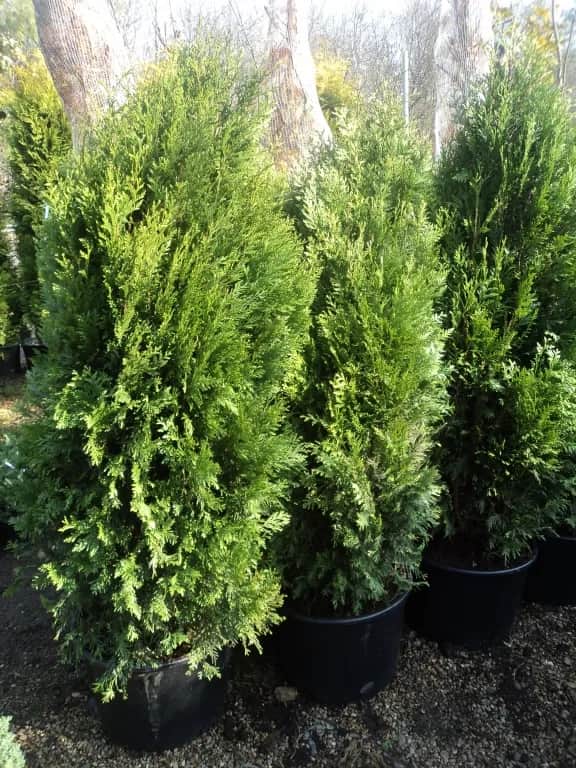
Planting and caring for ornamental conifers (conifers)
- Handle the plants with care so that the soil in the root ball remains attached to the roots as much as possible (Do not suddenly slam, and when lifting, support the root ball with your hand, not the plant).
PLANTING
- The optimal planting period is the dormant season (end of September - April). Depending on the weather, the planting period can be extended by 2 weeks.
- Dig the holes slightly larger than the soil ball with the roots.
- Place the plant with the soil ball in the pit, open the packaging on the top and side, then leave it on the bottom of the pit as it is biodegradable. It is not recommended to open the packaging before placing the root ball into the pit, so that the soil around the roots does not spread.
- Pour peat and well-rotted manure into the bottom of the pit, and after placing the root ball into the pit, add soil and well-rotted manure or peat to the edges (2-4 shovels per pit).
- Tamp the soil well around the seedlings to favor the contact of the roots with it.
- Planting depth: the upper part of the soil ball should be slightly below the ground level.
- Make sure that after planting around the plant, the soil remains lower than the surrounding land (a small pit to retain water) or make a small circular mound of soil around the plant so that around the plant there is a tub in which the water can sit.
WATERING
- When planting, water abundantly.
- Watering is done gradually depending on the permeability of the soil in such a way that the water penetrates deeply.
- Short and frequent waterings in hot periods are not recommended because they favor the occurrence of diseases.
- The frequency of watering depends on the rainfall regime, but even in drought, a good watering every 4-5 days in the first year, then weekly is sufficient.
- Time of day for watering: 19:00 (evening)-10 (morning).
TREATMENTS
- Even if in general softwoods are resistant to diseases, depending on the local conditions (infestation, pollution) problems may arise.
- At the beginning of the warming period, when the average daily temperature is above 10 degrees (beginning of May), a preventive treatment with fungicides (topsin, merpan, ridomil, etc.) is recommended. This treatment can be repeated every 2 weeks
- On the occasion of applying the treatment, foliar fertilizers with a high content of potassium and trace elements can be added at the same time.
The treatment is repeated if signs of infestation appear.
CROWN SHAPING
- Most of the softwoods support a cutting of the crown, by this the following is achieved:
- the freshness of the foliage
- correction of crown defects
- obtaining special forms
- The optimal period for pruning: the end of winter
- Pruning interval: 2-3 years
- Do not cut back heavily the branches near the stem only if they are dry or in the process of drying.
- Use hedge shears and first shorten the branches protruding more prominently from the crown, then cut the tips of the branches.
- Some species tolerate heavier pruning and recover quickly, others can only tolerate a fine cut of the tip of the leaf blade.
- The intensity of the pruning depends on the plant's ability to recover, so in species with a high capacity to recover the foliage, the cuts can be stronger, and in those with a low capacity to recover, the cuts will be more timid (pinching only a few cm from the top of the branches).